

Mary Guibert is the mother of singer-songwriter Jeff Buckley, the former wife of musician Tim Buckley, and the longtime public steward of Jeff Buckley’s posthumous work. Hachette identifies Guibert as executor of the Jeff Buckley Estate and credits her with compiling or producing several major archival releases.
Her public significance goes beyond her family connections. Guibert had substantial musical and performance training of her own, later worked in healthcare, and after Jeff’s death in 1997 became deeply involved in deciding how his unfinished recordings, writings and archive should be presented. Across nearly three decades of interviews and projects, a consistent theme emerges: she has treated Jeff’s unreleased work as material requiring context rather than simply more product.
Key takeaways
- Guibert was born in Panama and moved to the United States with her family as a young child.
- She trained in cello, piano, acting and dance while attending Loara High School in Southern California.
- She married Tim Buckley in 1965; they separated before Jeff Buckley was born in November 1966.
- After Jeff’s death in 1997, Guibert became closely involved in managing his recordings and archive.
- She remained publicly active in Jeff Buckley legacy projects through 2026, including the documentary It’s Never Over, Jeff Buckley.
Mary Guibert profile summary
| Detail | Verified information |
|---|---|
| Name | Mary Guibert |
| Born | Panama |
| Known for | Mother of Jeff Buckley; stewardship of his estate and catalogue |
| Former spouse | Tim Buckley |
| Early training | Cello, piano, acting and dance |
| Public role | Estate executor and curator; producer |
| Selected projects | Sketches for My Sweetheart the Drunk, Grace Around the World, You & I, Jeff Buckley: His Own Voice, It’s Never Over, Jeff Buckley |
| Current status | Publicly active in Jeff Buckley legacy work through 2026 |
Early life and artistic training
Guibert has said that she was born in Panama and that her family moved to the United States when she was three. Her account, preserved on Jeff Buckley’s official website, describes a family background with roots in Panama as well as Greek and French ancestry.

By her teenage years, music and performance were already central parts of her life. In a 2025 Los Angeles Times interview, Guibert recalled playing first-chair cello in a youth symphony, studying piano and acting, and training in ballet, tap and modern jazz while attending Loara High School. She also remembered wanting to become a Broadway actress.
That history gives useful context to her later role in managing Jeff Buckley’s recordings. Guibert was not approaching music solely as the parent of a famous musician; she had studied performance seriously herself long before Jeff’s career began.
Tim Buckley, marriage and family life
Guibert has said that she met Tim Buckley in a French class at school. The Los Angeles Times dates the beginning of their relationship to around 1964, when they were teenagers.
They married in 1965. The strongest published accounts agree that their relationship deteriorated during Guibert’s pregnancy and that they had separated before Jeff Buckley was born. Exact legal divorce dates differ across published sources, so a precise date is best left unstated.
Jeff was born in Anaheim, California, on November 17, 1966. Guibert was 18. According to Jeff Buckley’s official biographical material, he was subsequently raised by Guibert and his stepfather, Ron Moorhead, and grew up with a younger half-brother, Corey Moorhead.
Jeff’s relationship with his biological father was limited. David Browne’s account, published in The Guardian, records that Guibert took eight-year-old Jeff to see Tim perform in April 1975. Jeff then spent several days with Tim. Tim Buckley died later that year.
The reasons behind the collapse of Guibert and Tim Buckley’s marriage have been characterized differently in retrospective accounts. The most reliable conclusion is the simplest one: they separated before Jeff was born, and Tim did not become a regular parental presence in his childhood.
Life before managing Jeff Buckley’s estate
Guibert’s adult life did not immediately lead into music-industry work. By the time of Jeff Buckley’s death in 1997, she was working in healthcare in Orange County, according to a 2002 Guardian profile.
Jeff’s death changed the direction of her public life. His recorded legacy was unusually complicated: he had completed only one studio album, Grace, during his lifetime, while leaving behind live performances, studio sessions and unfinished work intended for a second album.
Managing that material required decisions not only about ownership and release schedules but also about artistic context. Guibert became one of the principal people making those decisions.
Taking responsibility for unfinished work
The first major test was Sketches for My Sweetheart the Drunk, released in 1998. Jeff had been developing the material before his death but had not completed the album.
Guibert became directly involved in determining how those recordings should be presented. In an April 1998 interview later republished by broadcaster Richard Kingsmill, she described the aim as creating “a record of where Jeff was when he died.” The wording is significant: it framed Sketches as documentation of an unfinished process rather than a finished album Jeff had personally approved.
That distinction became a recurring feature of Guibert’s approach to the archive.
In a 2016 Global News interview, she recalled asking for a full inventory of Jeff’s recorded material in 1998 and receiving a large binder cataloguing what was stored in the vaults. She also described resisting efforts to polish rough recordings simply to make them easier to release commercially.
The result was a form of curation built around selection and explanation. Unfinished recordings could have historical or artistic value without being presented as work Jeff had considered complete.
The major posthumous releases
Over time, Guibert’s role expanded from Sketches into broader management of Jeff Buckley’s archive.
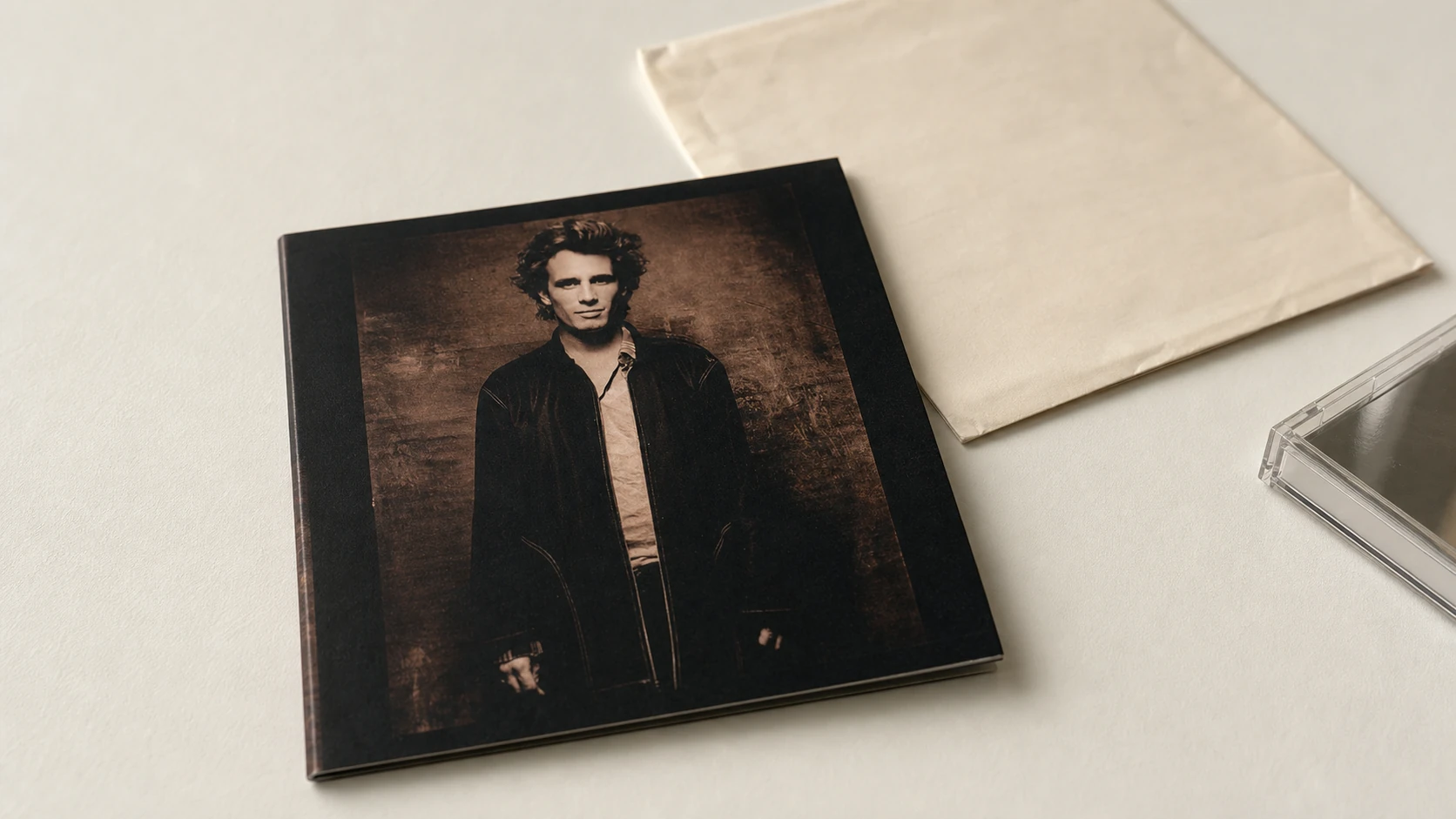
Hachette credits her with compiling or producing Sketches for My Sweetheart the Drunk, the live collection Mystery White Boy, So Real: Songs of Jeff Buckley, You & I and In Transition. Those projects served different purposes, from documenting concerts to making previously unreleased studio sessions available.
One of her clearest formal production credits came in 2009, when Sony/Legacy named her executive producer of Grace Around the World. The release assembled live performances of songs associated with Grace and marked the album’s 15th anniversary.
Another substantial archival release arrived with You & I. Sony’s announcement said the collection was overseen by Guibert. Released in 2016, it drew on early Columbia Records studio sessions that had remained largely unheard for more than two decades.
These releases show the practical scope of her work. She has not merely approved the use of Jeff Buckley’s name; she has participated in decisions about which recordings should surface, how they should be organized and what context should accompany them.
Expanding the archive beyond music
Guibert’s work with Jeff’s legacy has also extended into publishing.
In 2019, Hachette published Jeff Buckley: His Own Voice, edited by Guibert and writer David Browne. The book brought together Jeff’s own writings and other archival material, allowing readers to encounter his words directly rather than solely through a conventional biography.
That project fits the broader pattern of Guibert’s stewardship. Instead of attempting to complete what Jeff left unfinished, many of the projects she has overseen have presented source material in a way that makes its original status clear.
Her work has also included involvement with Road Recovery, a nonprofit organization that uses music and entertainment projects in programs for young people.
Guibert is sometimes described online as a co-founder, but an official Jeff Buckley and Road Recovery account names Gene Bowen and Jack Bookbinder as the organization’s co-founders. It says Guibert helped launch and develop the nonprofit, contributed financially and in kind, worked on grant research and writing, served as an early board member and helped attract support.
Her contribution was therefore substantial, but “helped launch and develop” is more accurate than calling her a co-founder.
A documentary years in the making
Guibert’s most visible recent project is Amy Berg’s documentary It’s Never Over, Jeff Buckley.

The collaboration developed slowly. In Magnolia Pictures’ official production notes, Berg says she first approached Guibert about a documentary in 2007. Guibert did not agree to collaborate until the summer of 2019.
That long gap matters because Guibert’s participation opened access to a much wider range of material connected to Jeff’s life. The finished film draws on archival recordings and personal material that could not be treated as ordinary public-domain biography.
It’s Never Over, Jeff Buckley premiered at the Sundance Film Festival in 2025. Magnolia’s official credits list Guibert as an executive producer, placing her not only among the documentary’s interview subjects but also among the people formally involved in its production.
The film’s release brought renewed attention to Guibert’s long role in controlling access to Jeff’s archive. It also made visible how selective that access has been: Berg’s own account shows that Guibert did not approve the project simply because a filmmaker asked.
Current role and continuing legacy work
Guibert remained publicly active in Jeff Buckley’s legacy through 2026.
Hachette continued to identify her as executor of the Jeff Buckley Estate, while ABC reported on April 30, 2026 that she remained the estate’s caretaker and an executive producer of Berg’s documentary.
In a January 2026 interview with The Observer, Guibert also discussed future possibilities for Jeff’s work, including hopes for further theatrical or film projects. Those comments describe ambitions and ongoing conversations rather than confirmed productions.
Her exact birth date is one detail that remains unresolved. A date widely repeated by entertainment databases conflicts with stronger recent reporting, and no authoritative primary record was established. For that reason, an exact age or birthday should not be treated as settled fact.
What is settled is her continued public role. Nearly three decades after Jeff Buckley’s death, Guibert was still involved in decisions about how his recordings, writings and life story reached new audiences.
Conclusion
Mary Guibert’s biography is inseparable from Jeff Buckley’s story, but it is not defined only by motherhood. Her own musical training, her early adult life outside the record industry and the responsibility she assumed after Jeff’s death all shaped a distinct public role: curator of an archive that contains both finished work and material its creator never had the chance to complete.
The most consistent feature of that role has been restraint. From Sketches for My Sweetheart the Drunk to later archival releases, publishing projects and It’s Never Over, Jeff Buckley, Guibert has repeatedly emphasized context over the illusion of completion. That approach has made her one of the key figures determining how Jeff Buckley’s work continues to be heard and understood.