
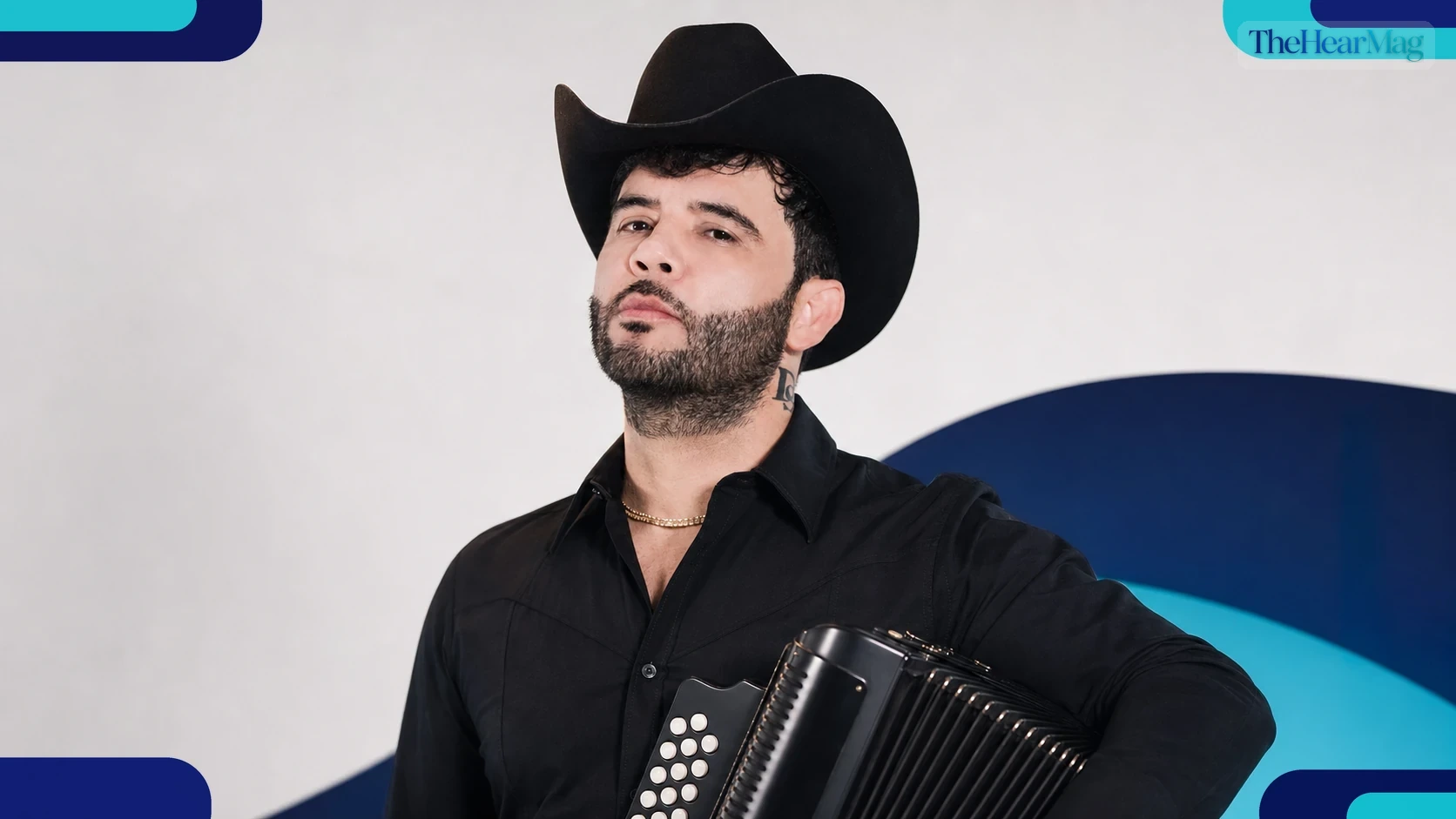
José Darey Castro is the Mexican música mexicana singer, accordionist, songwriter and producer most closely identified with Los Dareyes de la Sierra. His documented career reaches back to recordings with Los Alteños de la Sierra in 2004 and later includes major Billboard success, a Latin Grammy nomination, the 2023 Hot 100 appearance of “VVS,” and a renewed recording run through Redención in 2025 and SABIA in 2026.
His exact age and complete date of birth remain unresolved. Different biography sites publish conflicting April birthdays and birth years, but the stronger sources covering Castro’s career do not establish a definitive date. A 2025 Los Angeles Times profile instead provides a much firmer picture of his professional history, identifying him as an L.A.-based singer and accordionist associated with Navojoa, Sonora.
As of August, 2026, Castro remains active as a recording artist. SABIA, released April 16, 2026, is the latest studio album verified in the current Los Dareyes catalog.
Key takeaways
- José Darey Castro is the singer and accordionist at the center of Los Dareyes de la Sierra.
- A U.S. trademark record identifies him more fully as José Darey Castro Borbón, though that should not be presented as proven birth-certificate identity.
- His exact age, birth year and complete date of birth are not reliably established.
- He recorded with Los Alteños de la Sierra before surviving a deadly 2004 attack connected with that group.
- His career spans an 11-week Billboard Regional Mexican Airplay No. 1, a 2009 Latin Grammy nomination, the 2023 Hot 100 entry “VVS,” Redención in 2025 and SABIA in 2026.
Identity, name and origins
Castro’s public identity is closely tied to Los Dareyes de la Sierra, but documentary records provide a little more detail about his name. A U.S. trademark record for LOS DAREYES DE LA SIERRA lists the individual applicant and owner as José Darey Castro Borbón. The same record gives February 14, 2005 as the mark’s first use anywhere and first use in commerce.
That makes José Darey Castro Borbón the strongest documented fuller form of his name found in the public record. It does not establish that the wording necessarily matches his birth certificate, so describing it as his confirmed birth name would go beyond the evidence.
His geographic background also requires some care. Stronger music and interview sources associate Castro with Navojoa, Sonora, while weaker biography sites have placed his birth elsewhere, including Badiraguato, Sinaloa. No authoritative civil record has established his precise birthplace. The safest description is that Castro is from or strongly associated with Navojoa, Sonora.
The same limitation applies to his age. Circulating biographies offer incompatible dates, including April 16 and April 22 and various birth years. None is sufficiently supported to calculate a reliable age as of 2026.
Career beginnings with Los Alteños de la Sierra
Before Los Dareyes became his defining musical identity, Castro was already recording with Los Alteños de la Sierra.
Apple Music’s catalog links Darey Castro directly to Los Alteños recordings from 2004, including “La Más Bonita de Todas” and “El Corrido de las Águilas.” Those credits provide a firm starting point for the documented part of his career and help separate the earlier Los Alteños period from the later Los Dareyes name.
The precise formation date of Los Dareyes de la Sierra has been reported inconsistently. Some retrospective websites use 1997 or 1998, but stronger evidence points to the mid-2000s. Apple currently dates the formation to 2004, while the federal trademark-derived record establishes commercial use of the LOS DAREYES DE LA SIERRA name from February 14, 2005.
Taken together, those records support a chronology in which Castro was active with Los Alteños in 2004 and the Los Dareyes identity became established around 2004-05.
The 2004 attack and a turning point in his career
Castro’s early career was interrupted by a deadly attack involving Los Alteños de la Sierra in April 2004.
A contemporary El Universal report, published April 27, 2004, said members of the group were ambushed by armed men near Las Estrellas, close to the Sinaloa border. Citing Chihuahua state justice spokesperson René Medrano, the newspaper reported that three members were killed and three were wounded.
That contemporary account is important because later biographies have sometimes claimed that four people died or have given different locations. The period reporting is stronger evidence for the three-dead, three-wounded figure.
El Universal’s article did not identify Castro by name in the casualty passage, but later authoritative reporting ties him directly to the event. Billboard described the shooting as having nearly killed him, while the Los Angeles Times wrote in 2025 that Castro survived a deadly attack in 2004.
The public record does not establish a motive or identify the perpetrators with enough confidence to go further. What is clear is that Castro survived a violent disruption during the Los Alteños period and continued his career afterward under the Los Dareyes de la Sierra identity.
Billboard breakthrough and major early songs
Los Dareyes began building a documented Billboard history soon after the transition.
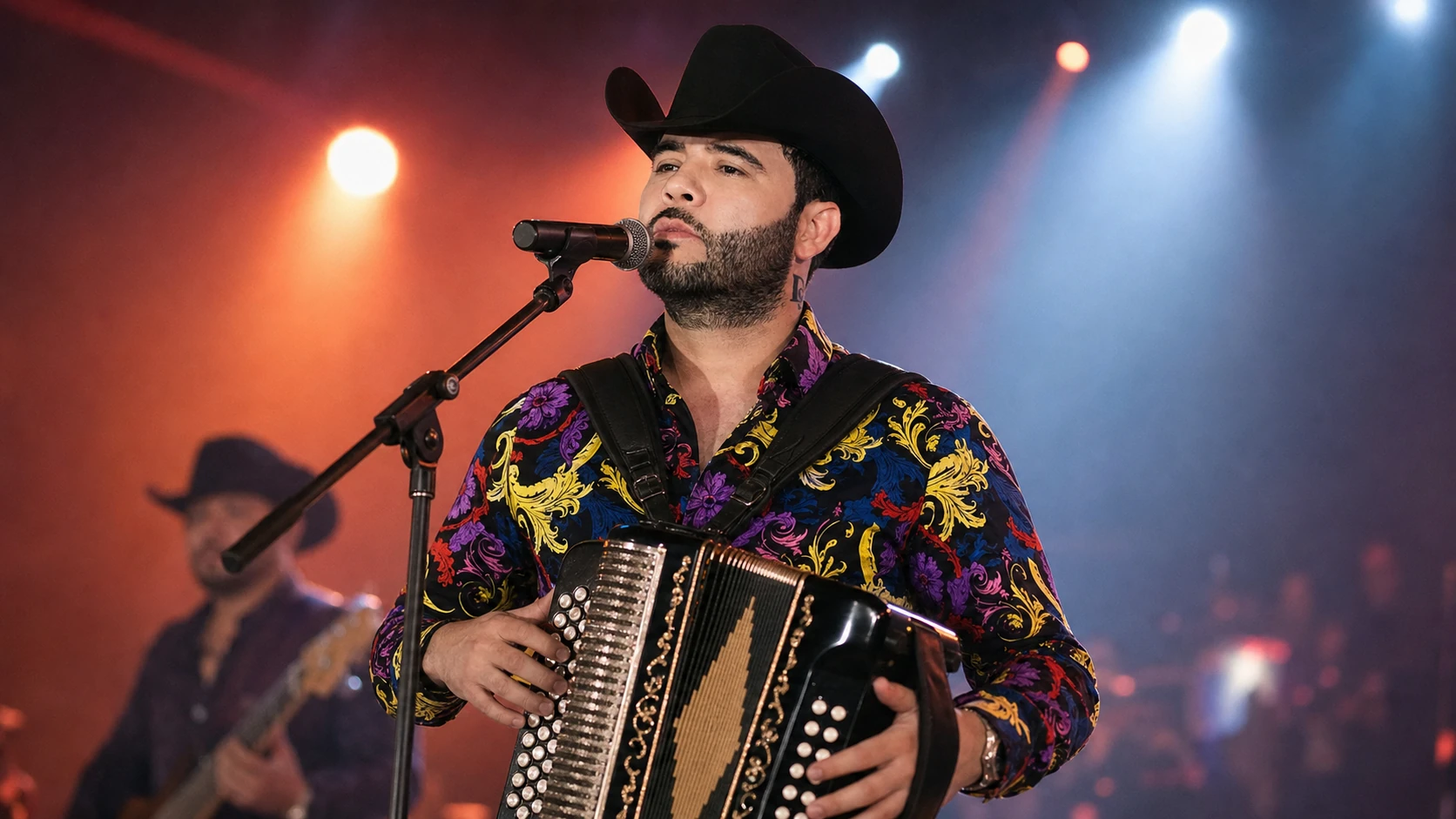
Billboard’s retrospective chart reporting identifies “El Jabalí” as an early breakthrough, reaching No. 21 on Regional Mexican Airplay in 2005. The group’s biggest early chart moment came three years later with “Hasta El Día De Hoy.”
In 2008, “Hasta El Día De Hoy” spent 11 weeks at No. 1 on Billboard’s Regional Mexican Airplay chart and reached No. 3 on Hot Latin Songs. That extended run remains one of the clearest measures of Castro’s commercial impact during the first major phase of Los Dareyes.
Other songs kept the group on the charts. Billboard’s historical reporting places “Sufre” at No. 3 on Regional Mexican Airplay in 2009 and “Enséñame a Olvidar” at No. 5 in 2011.
The album Con Banda also marked an important step. Archived Billboard coverage from 2008 documented the album entering Top Latin Albums, placing Castro’s chart breakthrough only a few years after the attack that had nearly ended his career.
Latin Grammy recognition and songwriting work
The group’s standing in regional Mexican music was reinforced in 2009 when Una Copa Más received a Latin Grammy nomination for Best Banda Album.
A BMI report from November 2009 identifies “Darey Castro of Dareyes De La Sierra” as a nominee and notes his performance at a Latin Grammy pre-party at the House of Blues at Mandalay Bay on November 4.
The distinction matters because some generic databases can blur the records of different musicians named José Castro. The documented Los Dareyes result is a nomination, not a Latin Grammy win.
Castro’s creative role also extends beyond lead vocals and accordion. Recording metadata for the 2025 song “Frecuencia” credits him with lead vocals, songwriting alongside Estevan Plazola, and production. His songwriting history reaches further back: “Enséñame a Olvidar” was among the songs recognized at the 2013 BMI Latin Awards, where Castro was credited alongside Edgar Cortázar and Adrián Pieragostino.
Those credits make it more accurate to describe Castro as a singer, accordionist, songwriter and producer rather than simply as the frontman of Los Dareyes.
A new audience through “VVS”
By the early 2020s, música mexicana was reaching a much larger mainstream U.S. audience, and Castro’s catalog entered that newer landscape through collaboration.
In 2023, Los Dareyes de la Sierra joined Edgardo Nuñez and Peso Pluma on “VVS.” Billboard reported that the track debuted at No. 54 on the Billboard Hot 100 on the chart dated July 8, 2023. It was the first Hot 100 appearance for Los Dareyes de la Sierra.
The significance of “VVS” lies in the span it revealed. Castro was not a newcomer arriving with the recent corridos boom; his Billboard history already stretched back nearly two decades. The collaboration instead connected an established regional Mexican act with a younger generation of artists and listeners.
That bridge between eras became increasingly important to the next phase of his career.
Redención and the 2025 revival
Castro’s renewed visibility developed into a substantial new recording cycle with Redención, released through Double P Records on May 8, 2025.
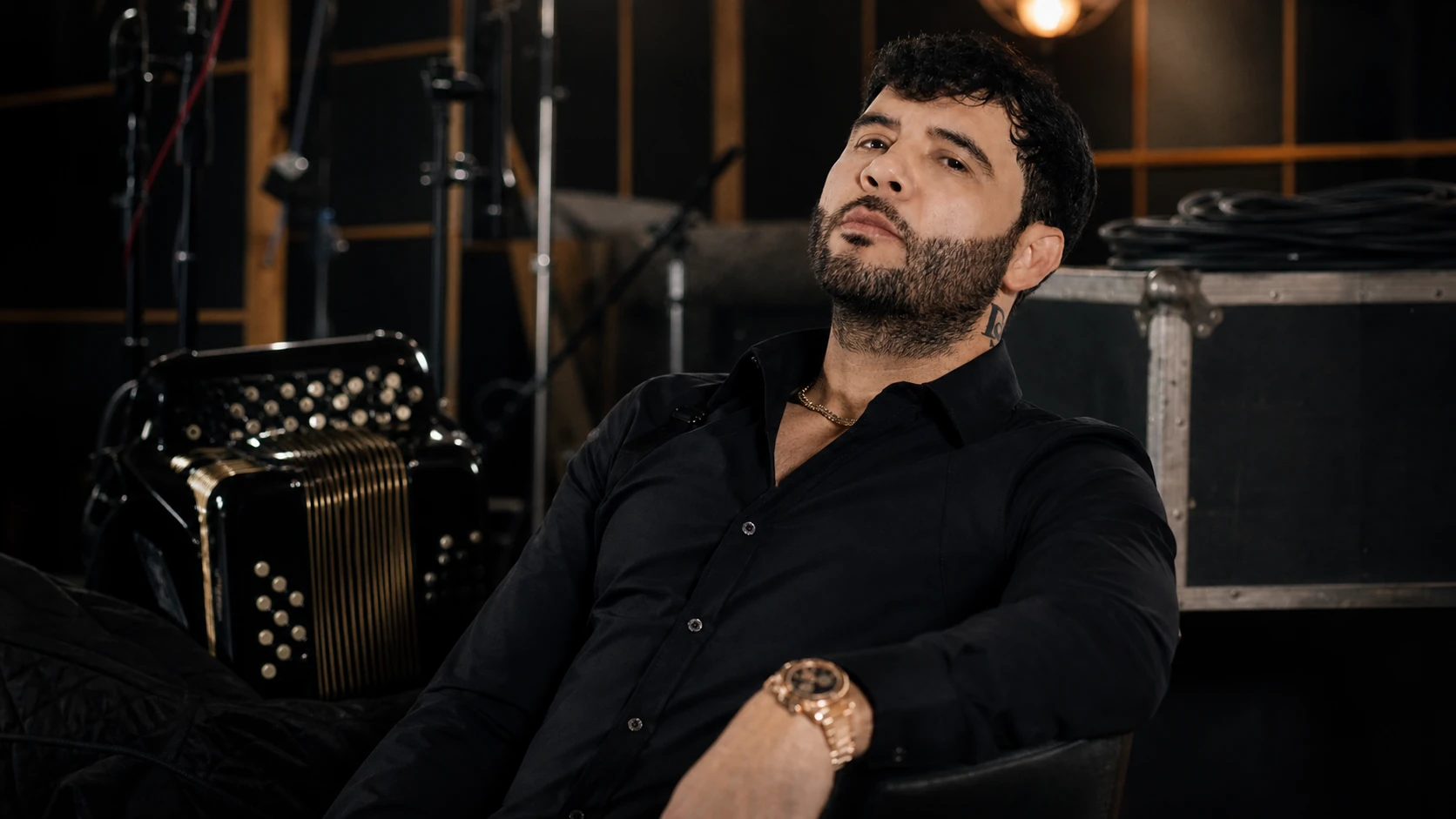
The 14-track project brought him together with several prominent names from contemporary música mexicana, including Tito Double P, Peso Pluma, Neton Vega and Gabito Ballesteros. The Los Angeles Times reported that Redención debuted at No. 3 on Spotify’s Top Albums Debut Global list.
One of the album’s notable collaborations was “Vita Fer” with Tito Double P, which the newspaper reported reached No. 1 on Billboard’s Mexico Songs chart. A deluxe edition followed, extending the project beyond its initial release.
The recording revival also moved into live performance. In summer 2025, Los Dareyes announced a 20-city U.S. tour billed as the project’s first tour of the country. The run was scheduled to begin in Los Angeles and was independently covered by both the Los Angeles Times and Rolling Stone.
For Castro, Redención was more than a retrospective return. It placed his long-established musical identity inside the contemporary Double P Records ecosystem and paired him with artists associated with the newer corridos and música mexicana audience.
SABIA and his current career
The momentum continued into 2026.
According to Apple Music’s SABIA listing, Los Dareyes de la Sierra released the album on April 16, 2026 through Double P Records. It contains 21 tracks and runs for approximately one hour.
Apple’s current editorial presentation describes Los Dareyes as increasingly centered on Castro. That characterization fits the contemporary project, although it should not be applied retroactively to every era of the group. Billboard was still identifying José Darey Castro alongside Miguel Enrique Razcón and Juan Vázquez as members in 2023.
There were additional signs of commercial activity in 2026. The RIAA database records an April 29 certification for “Mi Droga” by Grupo Frontera featuring Los Dareyes de la Sierra, while the current catalog also includes 2026 material such as “MATCHA” and “TETRICO.”
As of August, 2026, SABIA is the latest verified Los Dareyes studio album, and Castro remains active as a recording artist.
What remains private or unverified
Castro’s professional record is much more thoroughly documented than his personal life.
Reliable sources do not establish his exact date of birth, current age, confirmed civil birthplace, formal education, spouse or partner, children, height, weight or personal net worth. Those gaps should not be filled with figures copied from unsourced celebrity-profile sites.
That is particularly important with financial claims. Chart placements, streams, RIAA certifications, touring and label affiliations can demonstrate commercial activity, but they do not reveal a person’s assets, liabilities or personal fortune. The multimillion-dollar net-worth figures circulated by some biography pages therefore lack a sufficient evidentiary basis.
Relationship and family claims present the same problem. Without a reliable first-party statement or reputable report confirming a spouse or children, those details should remain outside a factual biography.
Conclusion
José Darey Castro’s documented significance lies in the length and adaptability of his musical career. He was recording with Los Alteños de la Sierra by 2004, survived a deadly disruption to that chapter, built Los Dareyes de la Sierra into a Billboard-charting act, earned a Latin Grammy nomination and later found another wave of visibility through collaborations with artists such as Peso Pluma and Tito Double P.
His exact age and several private details remain unresolved, but the professional chronology is clear. With Redención in 2025 and SABIA in 2026, Castro continues to connect an earlier era of regional Mexican music with the contemporary música mexicana scene.